Mice Cats: A Cute Decorative Font
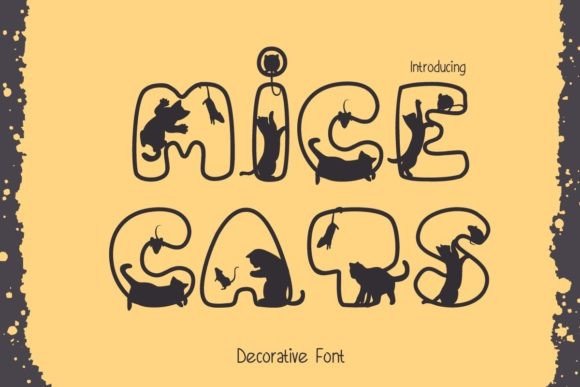
Working on a branding project for a small, cozy café recently, I found myself searching for a font that could capture the playful yet professional vibe the client wanted. That’s when I stumbled upon Mice Cats, a decorative font that blends cats and mice silhouettes with transparent text. It was love at first sight.
The visual appeal of Mice Cats is undeniable. The font features delicate silhouettes of cats and mice intertwined with the letters, creating a whimsical and charming aesthetic. The transparent elements add a subtle layer of depth, making it perfect for designs that need a touch of personality without overwhelming the viewer.
One of the first things I did was test Mice Cats on a logo draft. I used it for the café’s name, and it immediately gave the brand a sense of warmth and creativity. The font’s quirky style made it stand out, but it still maintained enough elegance to feel appropriate for a professional setting.
Using Mice Cats in Branding Projects
As the project progressed, I experimented with Mice Cats across various design elements. On business cards, it added a friendly, approachable feel that matched the café’s atmosphere. For packaging mockups, the font worked well on label stickers, giving them a unique and eye-catching look.
In social media graphics, Mice Cats helped create a cohesive visual identity. Whether it was for Instagram posts or promotional banners, the font brought a sense of fun and consistency to the brand’s digital presence. It also paired nicely with simpler typefaces, allowing for a balanced visual hierarchy.
When designing a homepage hero section for the café’s website, I used Mice Cats as a headline font. The combination of the silhouettes and the transparent text created an engaging focal point that drew attention without being too distracting.
Design Considerations and Practical Tips
While Mice Cats is undeniably cute, it’s important to consider its readability. As a decorative font, it works best in short-form text, such as headlines, logos, and accents. Using it for body copy would likely compromise legibility, so it’s best reserved for display purposes.
Testing the font in different contexts is crucial before finalizing a design. I recommend experimenting with various sizes, colors, and backgrounds to see how it performs. Sometimes, a bold color can make the silhouettes more visible, while a monochrome palette can give it a more refined look.
Pairing Mice Cats with other fonts can enhance its impact. A clean sans serif font like Helvetica or Arial can provide contrast and balance, making the decorative elements stand out without clashing. Alternatively, a soft script font might complement the whimsical nature of Mice Cats, adding a touch of elegance.
Font Pairing and Style
For a more dynamic look, I often pair Mice Cats with a serif font like Georgia or Garamond. This combination adds a classic touch while maintaining the playful essence of the decorative font. It’s especially effective for editorial designs, where the contrast between styles can guide the reader’s eye through the content.
When working with clients, I always ask about their brand’s personality and target audience. Mice Cats is ideal for businesses that want to convey a sense of fun, creativity, or nostalgia. It’s particularly suited for small boutiques, handmade shops, and creative studios looking to establish a distinctive visual identity.
Checking the font’s features is also important. Mice Cats includes multiple styles, alternates, and ligatures, which offer flexibility in design. Its multilingual support ensures it can be used across different markets, and the commercial licensing makes it suitable for a variety of projects, from print to digital assets.
Real-World Applications
On a shop sign, Mice Cats added a welcoming and memorable quality that made the café instantly recognizable. For product labels, it gave each item a personal touch, reinforcing the brand’s unique character. Even in printed marketing materials, the font contributed to a cohesive and engaging visual language.
When designing flyers or posters, I used Mice Cats to highlight key messages, such as promotions or event announcements. The font’s distinctiveness made it easy to spot, helping to draw attention without overwhelming the viewer.
Overall, Mice Cats has proven to be a versatile and expressive tool in my design workflow. Its blend of cuteness and sophistication makes it a valuable addition to any designer’s font library, especially when working on projects that require a touch of personality and charm.
Whether you’re creating a logo, designing packaging, or developing a brand’s digital presence, Mice Cats offers a fresh and creative approach to typography. It’s a font that not only looks good but also tells a story, making it a great choice for designers who want to bring a little bit of whimsy into their work.